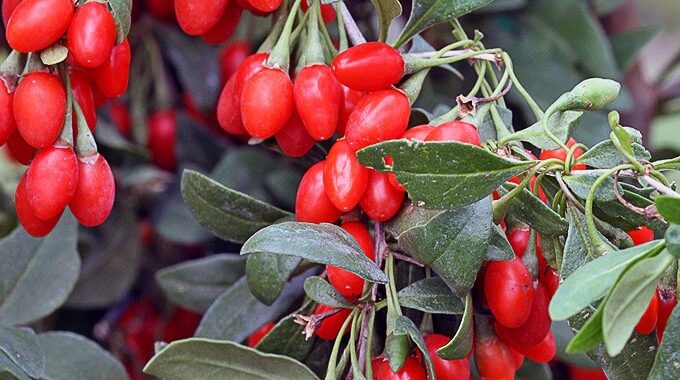
Chinese Goji Berry has been A New Favorite of the World
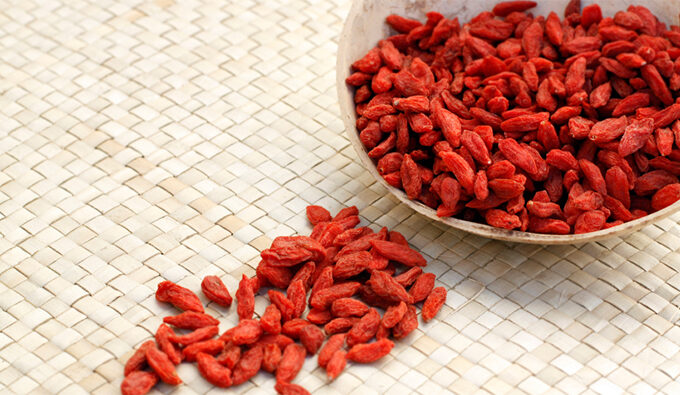
Chinese people still consider goji berries as tonics such as goji berry tea, wine or soup, but foreigners have already turned them into star foods. Foreigners



Chinese people still consider goji berries as tonics such as goji berry tea, wine or soup, but foreigners have already turned them into star foods. Foreigners
Ning Qi 1 Planting: garden should be selected soil or light soil, underground water level not higher than 90 cm. A small area of artificial cultivation producti
Materials: 2 tbsp dried echinacea root; 200 ml water, freshly boiled; 5 tbsp goji berries, fresh or dried; 2 litres chicken stock (homemade or from stock
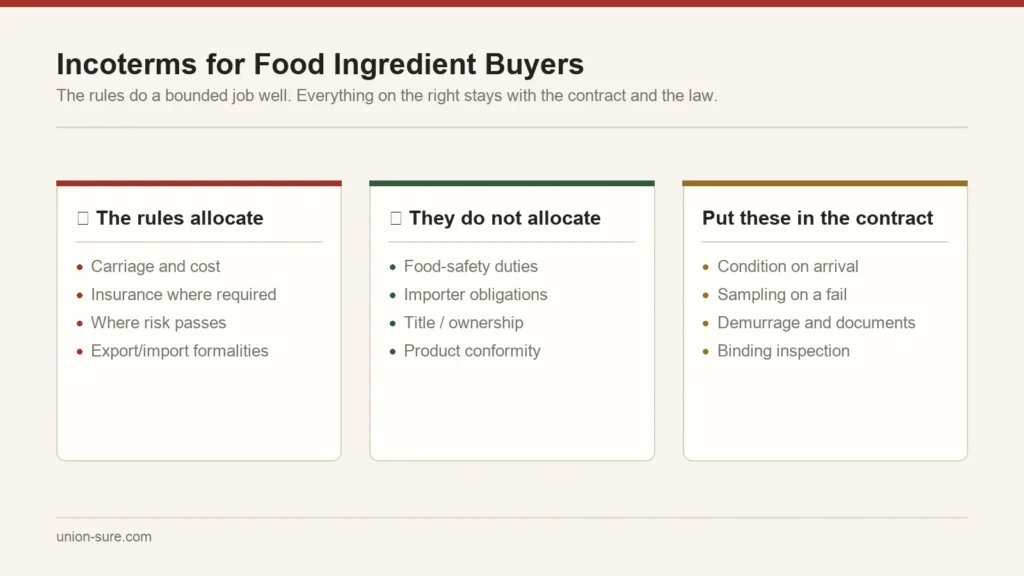
Most Incoterms mistakes in this trade are not really about Incoterms. They are about someone assuming that choosing a three-letter rule settled a question the rule never addressed.
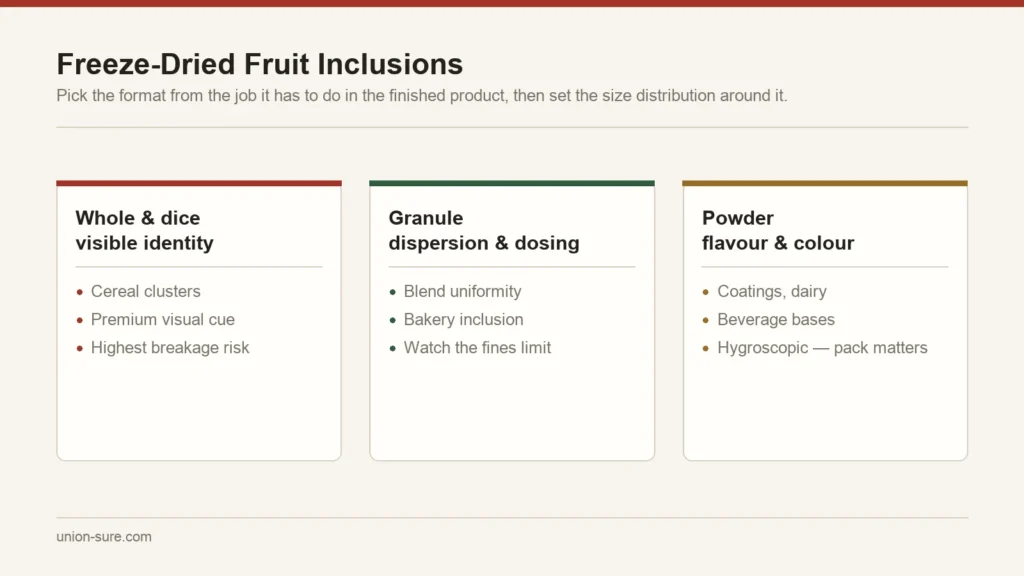
A customer once approved a freeze-dried strawberry dice on the bench, then found half of it had turned to red dust by the time it reached the far end of a cereal line.
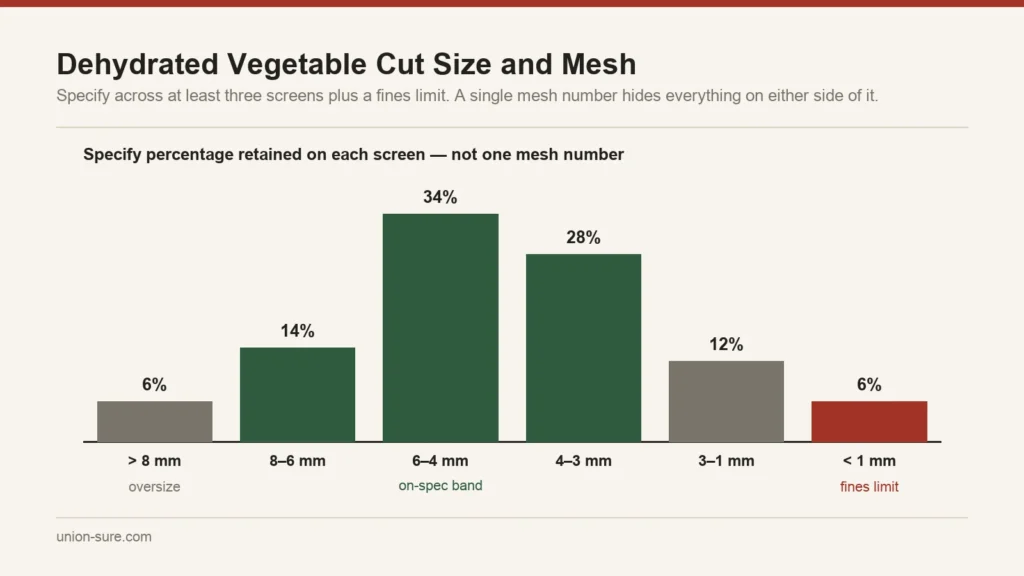
Ask three suppliers for “dehydrated carrot granules” and you will get three genuinely different products, all correctly named.
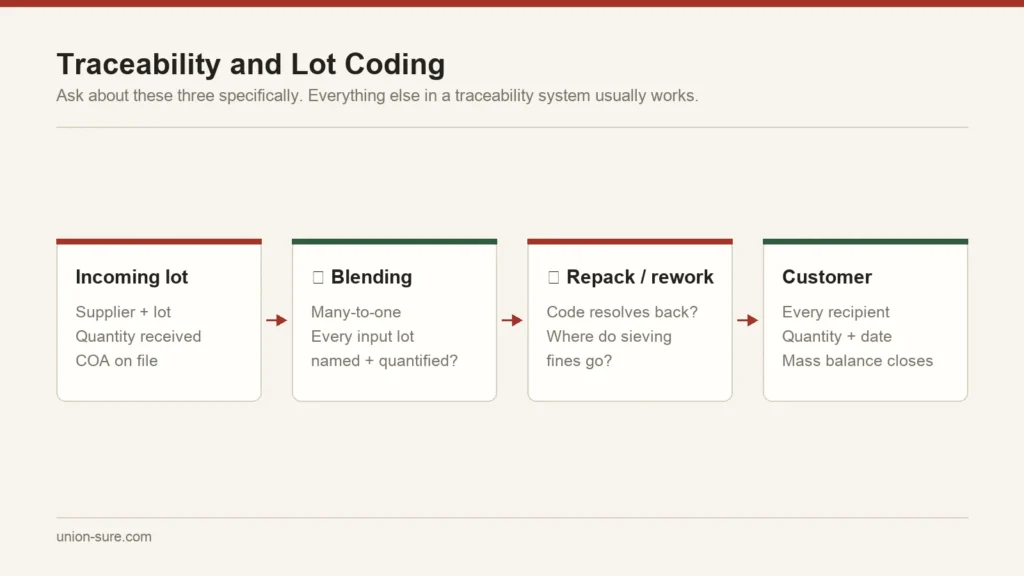
The mock recall is where traceability systems go to die. Everything looks fine in the folder, then somebody picks a lot code off a bag, starts a stopwatch, and asks two questions: where did this come from, and where did all of it go.
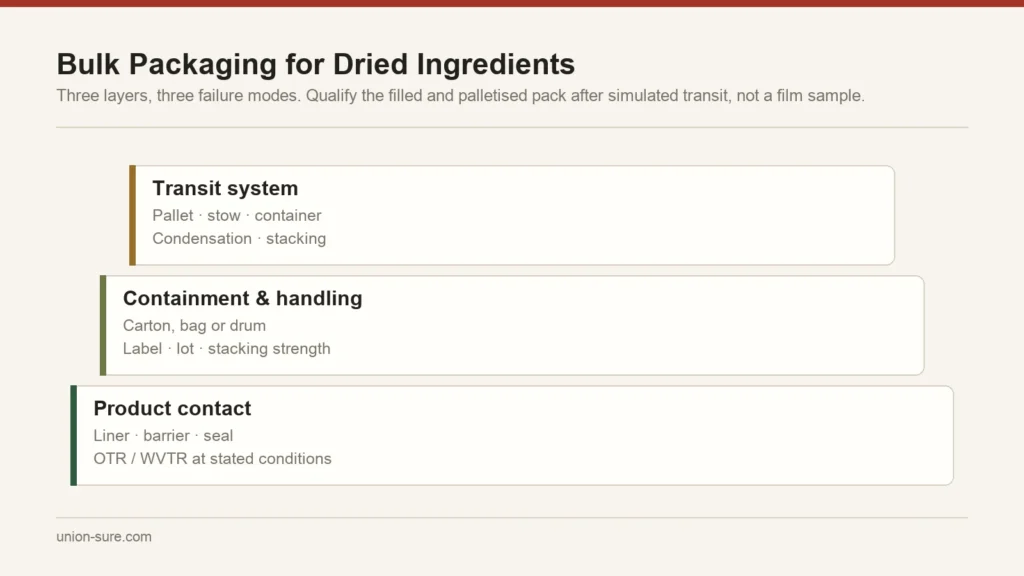
A 25 kg bag has exactly one job: deliver the ingredient in the condition the specification promised, after four weeks inside a steel box crossing the tropics.
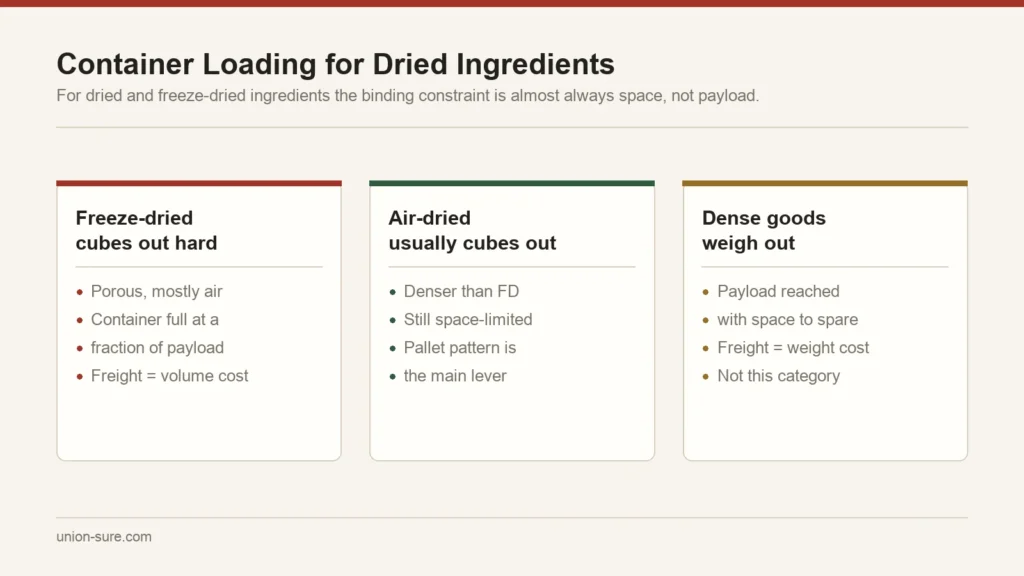
A 40-foot container will legally carry somewhere in the region of 26 tonnes. A container of freeze-dried strawberry slices will be completely full at a small fraction of that, and the difference is money.
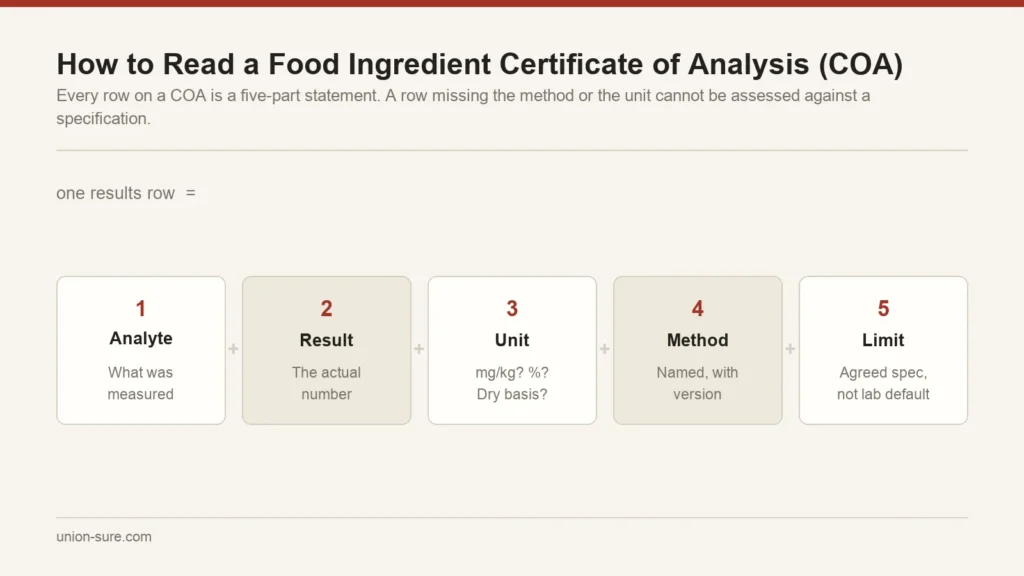
Buyers ask us for a certificate of analysis before they ask us for a price. That is the right instinct. It only helps, though, if somebody actually reads the thing.
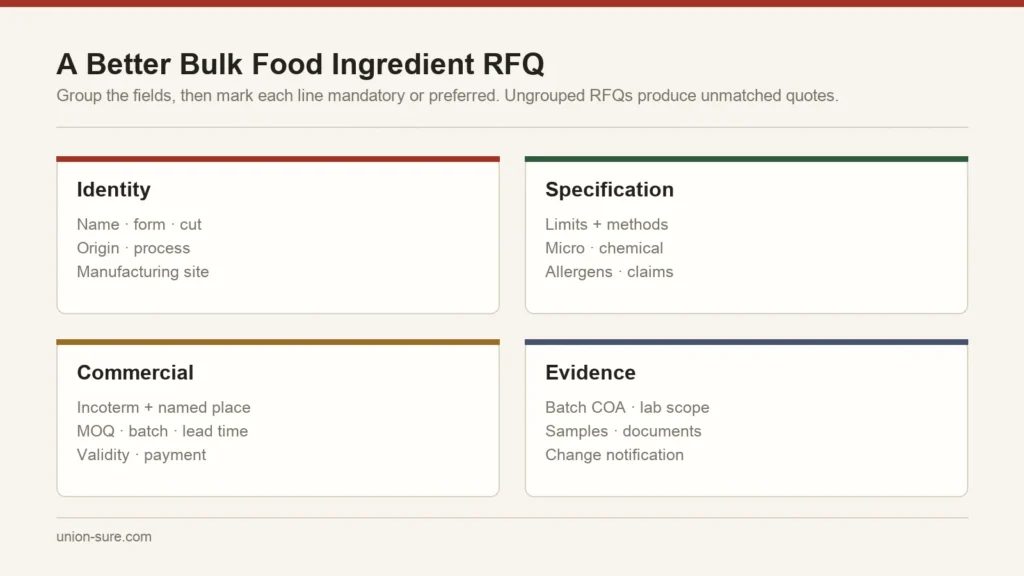
We answer a lot of RFQs. The ones that come back fast, accurate and competitively priced all share a trait: they describe the product precisely enough that we cannot accidentally quote something cheaper and different.
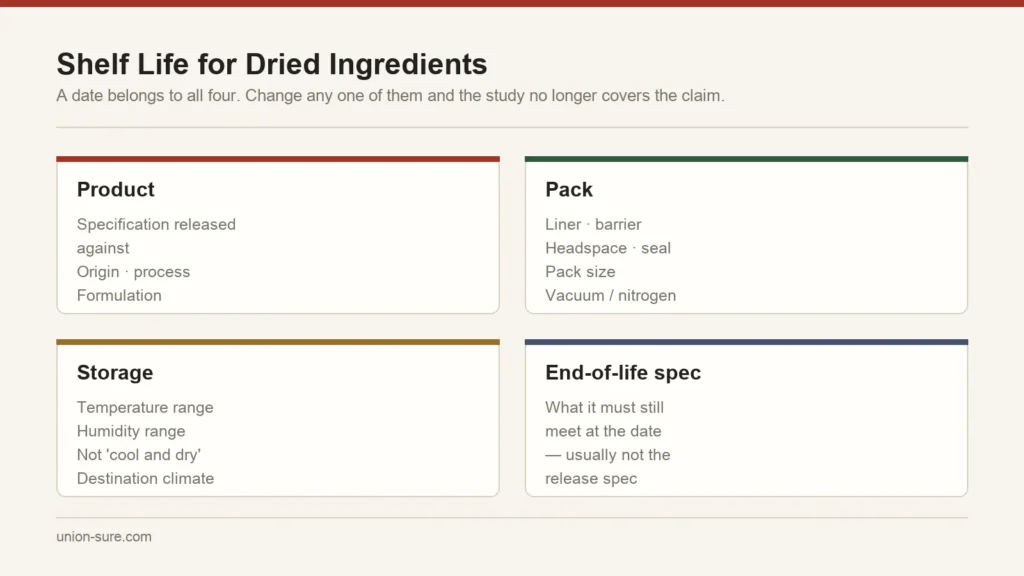
Ask five suppliers for the shelf life of dried goji and you will get “24 months” five times. Ask what was measured to arrive at it and the conversation usually stops.
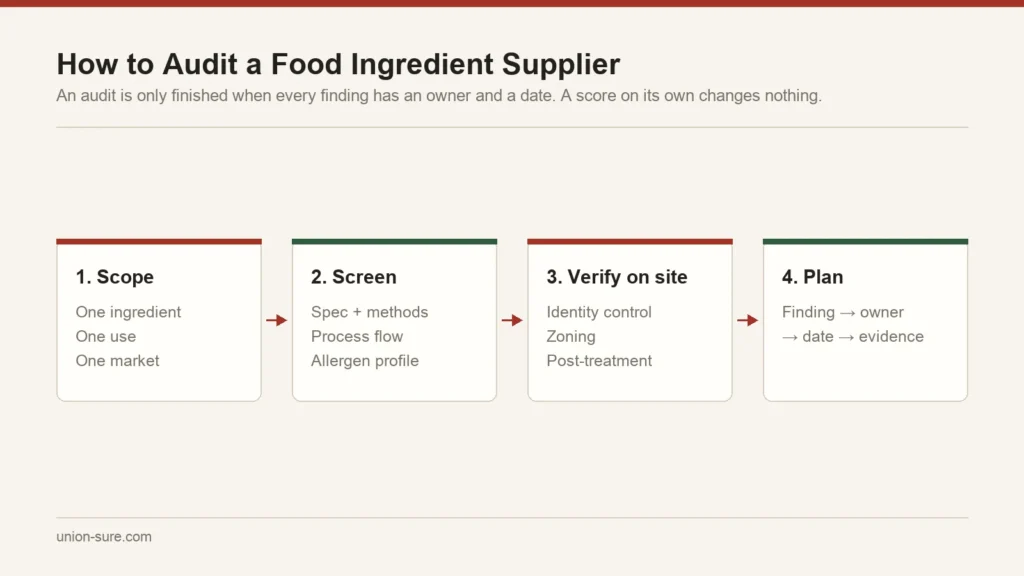
Most supplier audit reports we are asked to fill in run to forty pages and answer the wrong question. They describe a factory. They do not tell the buyer whether that factory can supply this ingredient, at this specification, into this market, batch after batch after batch.

Products