
A mechanistic laboratory study from the University of Sydney that set out to identify which component of goji berry might act on retinal cells, and landed on taurine.
How the study was done
Cell-culture work on the ARPE-19 human retinal pigment epithelial line, plus a PPAR-γ reporter assay in HEK293 cells. Researchers tested a Lycium barbarum extract and isolated taurine, using the selective PPAR-γ antagonist GW9662 as a control.
What it found
Both the extract and taurine dose-dependently increased PPAR-γ activity, an effect significantly reduced by the antagonist, and increased PPAR-γ mRNA and protein expression. Under a high-glucose inflammation model, both down-regulated pro-inflammatory mediators including MMP-9, fibronectin, COX-2 and iNOS.
Limitations worth stating
This is cell-culture work only. There are no animal or human results here, and the authors frame it as identifying a possible mechanism, not demonstrating a treatment.
Why this matters when sourcing goji berries
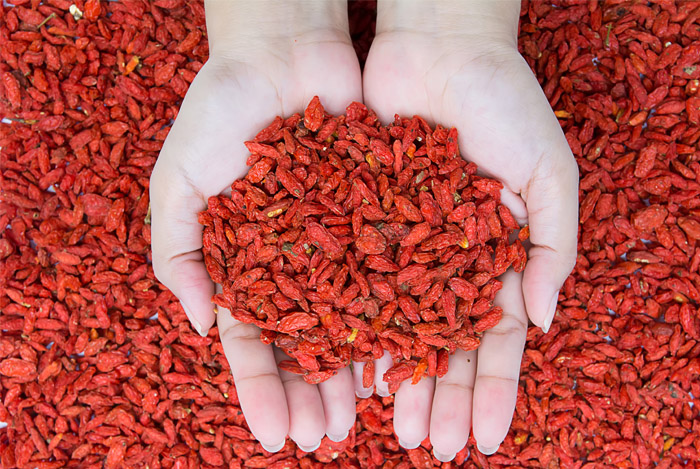
The commercially relevant point is compositional, not clinical: this line of research points at taurine as an active constituent. If a customer is specifying a goji extract rather than whole dried fruit, taurine content is a parameter worth agreeing on up front, because extraction method changes it.
Source
Song MK, Salam NK, Roufogalis BD, Huang THW. Faculty of Pharmacy, The University of Sydney, 2011 — read the original paper.
Research summary. This page summarises independently published research on Lycium barbarum for reference. It is not a health claim and not a statement about any product we supply. Union-Sure supplies goji berries as a food ingredient; we make no medical or therapeutic claims.