
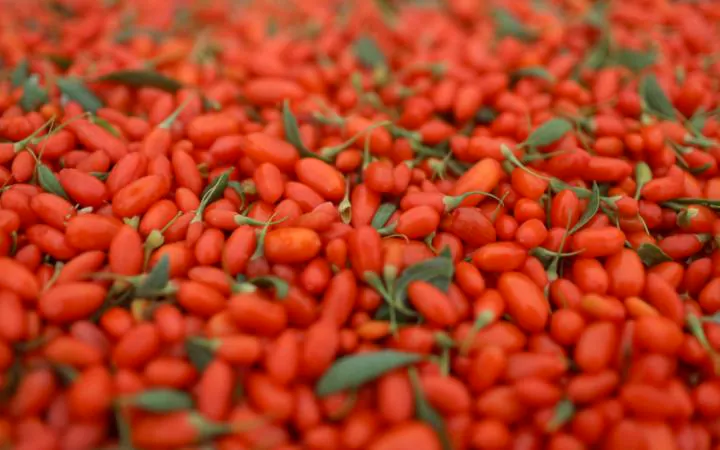
A companion piece to the taurine research above, working on the same cell type but focusing on the barrier function of the retinal epithelium.
How the study was done
Human retinal pigment epithelium cells were exposed to 25 mM glucose to model chronic hyperglycaemia. Researchers measured transepithelial electrical resistance (TEER) as a proxy for barrier integrity, alongside intracellular cAMP and adenylyl cyclase activity, then tested a methanolic goji berry extract and isolated taurine.
What it found
High glucose caused a rapid drop in TEER and a concurrent rise in intracellular cAMP, linked to increased activity of the cytosolic adenylyl cyclase isoform. Both the goji extract and taurine restored control levels.
Limitations worth stating
Again a cell model. The authors themselves frame the findings “in view of a possible prevention approach” — that is a hypothesis for further work, not a demonstrated effect in people.
Why this matters when sourcing goji berries
Same practical conclusion as the Sydney study: the active fraction being investigated is taurine, which is an extraction-dependent parameter. For whole dried berries this research has no direct specification implication — it matters when the buyer is specifying an extract.
Source
Pavan B, Capuzzo A, Forlani G. Experimental Eye Research — read the original paper.
Research summary. This page summarises independently published research on Lycium barbarum for reference. It is not a health claim and not a statement about any product we supply. Union-Sure supplies goji berries as a food ingredient; we make no medical or therapeutic claims.